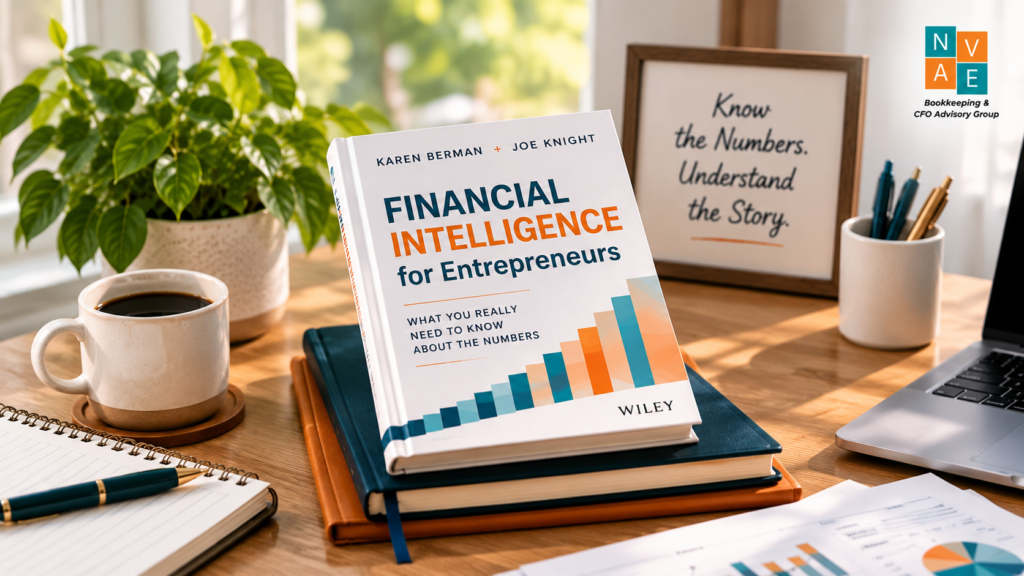
Financial Intelligence for Entrepreneurs
by Karen Berman & Joe Knight
Lessons from Financial Intelligence for Entrepreneurs by Karen Berman and Joe Knight
Welcome back to the NAVE Business Book Club. Each month, we use one business book to look at a real issue business owners face and turn it into something practical.
This month’s selection is Financial Intelligence for Entrepreneurs by Karen Berman and Joe Knight. The book is written for business owners and leaders who need to understand financial reports without becoming accountants. It explains what the profit and loss statement, balance sheet, and cash flow statement can tell you—and why the assumptions behind those numbers matter.
Last month, we focused on intention: looking at the right number and involving the right person before making a decision. This month, we are moving to perspective.
If someone outside your business reviewed your financial statements today, what story would they see?
That question matters because a lender, investor, buyer, or advisor does not see the daily work behind your results. They see the patterns on the page. Financial intelligence helps you understand that outside view before an important conversation begins.
The Big Idea for This Month
The main idea I took from the book is simple:
Knowing the numbers is not the same as understanding the story behind them
Financial statements look exact because they are filled with dollar amounts and totals. But timing, estimates, categorization, and accounting decisions can affect what appears on the page. That does not mean the reports are wrong. It means you should ask what is behind a number instead of assuming one line tells the whole story.
A business can show a profit and still feel short on cash. Revenue can increase while gross margin falls. The bank balance can look healthy even though payroll, taxes, vendors, and loan payments are already waiting. Each number may be accurate and still give you only part of the picture.
Financial intelligence means reading the report, understanding what it can and cannot tell you, and knowing which question to ask next.
Three Statements Three Different Views
No single financial statement tells the complete story. Each report answers a different question.
Statement
What It Shows
Question to Ask
Profit and Loss
Revenue, direct costs, oprating expenses and profit during a period
Are sales producing healthy margins and a profit the business can sustain?
Balance Sheet
What the business owns, what it owes, and the equity that remains
What obligations, receivables, or debt are not visible on the P&L?
Cash Flow Statement
How cash moved through operations, investing, and financing
Where did the cash come from, where did it go, and can operations support the business?
The P&L may show a profit. The balance sheet may show that customers still owe you a large amount of money. The cash flow statement may show that cash went toward equipment, loan principal, or owner distributions. The reports are not disagreeing. They are showing different parts of the same business.
Looking Beyond the Bottom Line
Most owners look at net profit first. I understand why. You want a clear answer about whether the business made money. Net profit matters, but the book pushes the reader to look one level deeper.
1 Revenue
Revenue shows how much the business sold. It does not tell you whether the work was priced correctly or whether the growth produced enough profit.
2 Gross Profit
Gross profit shows what remains after direct costs. The margin trend often tells you more than the dollar amount because it can reveal pricing pressure, rising costs, or work that is no longer profitable.
3 Net Profit
Net profit is the accounting result for the period. It is important, but it is not the same as cash in the bank.
4 Cash
Cash shows what is available now. The balance alone does not tell you what is already committed, what the company owes, or whether customers are paying on time.
Perspective comes from the relationships between the numbers. A banker may focus on consistent profit and the ability to repay debt. A buyer may ask whether earnings can continue without the current owner. An investor may focus on growth, return, and risk. As the owner, you should understand those outside views while still using the reports to run the business today.
Let’s Put the Idea Into Practice

Imagine a contractor reviews the year-to-date P&L and sees strong revenue and a healthy profit. From the owner’s perspective, the business looks ready for another truck and a new employee.
Then the owner reviews the balance sheet and sees that accounts receivable has increased significantly. Several large customers have not paid. The company also has current loan obligations, and the cash flow statement shows that operating cash is tighter than the profit number suggests.
The P&L was not wrong. It simply did not answer the entire question.
Before moving forward, the owner should ask:
- Has the recent revenue actually been collected?
- Can the current gross margin support another employee?
- How would the truck affect cash and monthly debt payments?
- Is there enough working capital for payroll and vendors?
- What happens if customer payments slow down further?
Where Are You in This Conversation
Financial intelligence develops in stages. You do not have to master every formula at once. You do need to keep moving from receiving reports to understanding them and using them before you make decisions.
Receiving Reports
Asking Better Questions
Using Numbers Before Decisions
Your books may be current, but you mainly check revenue, profit, or the bank balance.
You compare periods, review margins, and ask why important numbers changed.
You use the P&L, balance sheet, cash flow, and forecasts before hiring, borrowing, pricing, or expanding.
You may rely on your bookkeeper or tax professional to point out anything important.
You ask about timing, assumptions, unusual categories, and what each report leaves out.
You bring in the right financial professional early enough to compare your options before the decision is final.
Your next step is to become comfortable opening and reviewing the reports.
Your next step is to connect the numbers to what is happening inside the business.
Your next step is to make financial perspective part of your regular decision process.
A Note from Rita
What stood out to me is how many business owners believe they should understand every financial statement without anyone explaining it to them. They receive the reports, go straight to the bottom line, and hesitate to ask questions because they do not want to feel unprepared.
You do not need to become an accountant to run your business well. You do need to understand enough to notice when the numbers do not match what you are experiencing in the business.
My years in business consulting taught me something important: the person reviewing your statements from the outside sees the pattern on the page before hearing the story behind it. A banker may notice shrinking margins, rising debt, slow collections, or inconsistent profit before asking you a single question.
That does not mean the numbers tell the whole story. It means you should understand the story they are telling. When you can explain what changed, why it changed, and what you are doing about it, you walk into the conversation prepared instead of surprised.
Book Club Discussion
As you reflect on this month’s selection, consider these questions:
1. Which financial statement do you review most often, and which one do you avoid?
2. Have you ever shown a profit on paper but still felt short on cash? What was happening elsewhere in the business?
3. Which number do you accept without asking how it was calculated or categorized?
4. What would a banker, investor, or buyer notice first in your recent financial results?
5. What upcoming decision would benefit from reviewing more than one financial statement?
You do not need to know every accounting rule. You need enough understanding to ask a useful question and recognize when the story needs more context.
This Month’s Book Club Practice
The Three Statement Story Exercise
Choose one recent month or quarter. Place your P&L, balance sheet, and cash flow statement side by side. Then work through these four steps.
Notice
Connect
Question
Decide
What changed in each statement, and by how much?
How might revenue, receivables, debt, purchases, or owner activity connect the results?
What do the reports not explain on their own, and who should you ask?
What will you monitor, change, delay, or investigate next?
Do not rush to fix every number. Start by understanding the story. Build the habit of moving from observation to explanation, and then from explanation to action.
Where NAVE Fits
At NAVE, we help business owners move beyond simply receiving financial reports.
Through bookkeeping, we create accurate and organized statements so you have a reliable foundation. Through CFO advisory, we help you connect profit, cash flow, working capital, debt, pricing, and growth so the reports become useful before an important decision is made.
We also help owners prepare for conversations with lenders, tax professionals, investors, and other advisors. My goal is not to overwhelm you with accounting language. It is to make sure you understand the story, know what to ask, and walk into the conversation prepared.
Final Thought
Financial Intelligence for Entrepreneurs reminds us that financial confidence does not come from memorizing every formula. It comes from understanding what the numbers mean, recognizing what they leave out, and being willing to ask the next question.
Your financial statements are already telling a story about your business. A banker may read that story for risk. An investor may read it for opportunity. A buyer may read it for future value. As the owner, you should understand the story before someone else defines it for you.
This month, choose one reporting period and complete the Three Statement Story Exercise. If the numbers still feel disconnected from the decisions you need to make, schedule a complimentary Financial Clarity Call with NAVE. Together, we can identify what your reports are saying, what may be missing, and what deserves your attention next.