Lessons from Simple Numbers, Straight Talk, Big Profits by Greg Crabtree
Welcome back to the NAVE Business Book Club, where each month we use one business book to explore an idea that can help you build a stronger, healthier business.
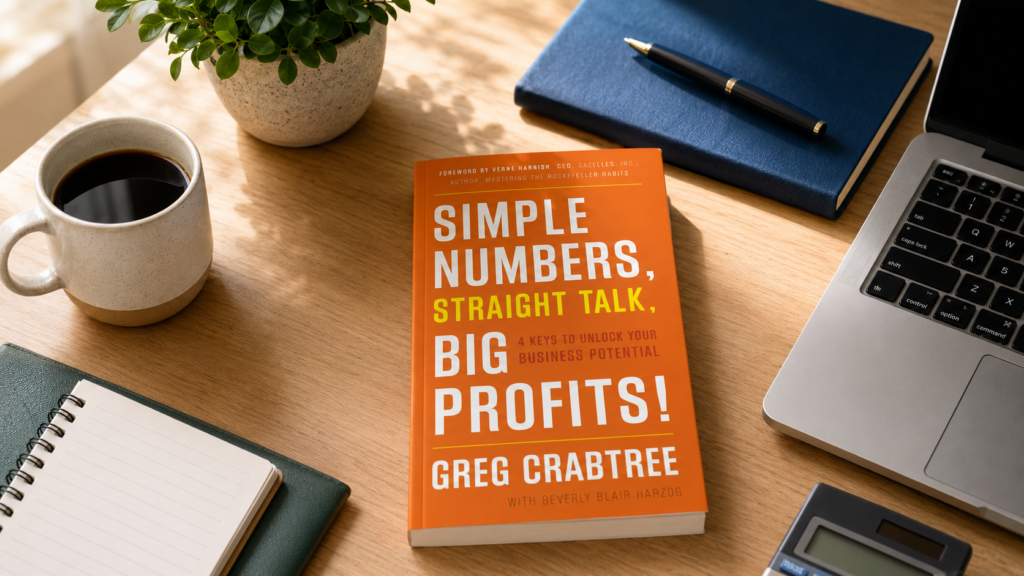
This month’s selection is Simple Numbers, Straight Talk, Big Profits by Greg Crabtree. It arrives at an important point in our conversation. Last month, we focused on understanding the different financial roles surrounding a business. This month, we are moving from clarity to intention.
Once you understand what your bookkeeper, tax preparer, CPA, and CFO advisor each do, the next question becomes:
Are you looking at the right numbers—and asking the right person to help you understand them?
That question is at the center of both this month’s book and our August theme. Your tax preparer may be an important and trusted part of your financial team. But preparing a tax return and helping you make ongoing business decisions are not always the same service. The goal is not to replace a trusted professional. It is to understand what each relationship includes and intentionally choose the right guidance for the decision in front of you.
The Simple Numbers Every Business Owner Should Understand
Crabtree’s message is that business owners do not need to study every number equally. They need to focus on the few numbers that reveal whether the company is financially healthy.
1. True Profitability
Revenue alone does not show whether a business is financially successful. Owners must understand what remains after properly accounting for operating costs and fair compensation for the work they perform.
2. Owner Compensation
Owner pay and business profit are not the same thing. Paying the owner a reasonable amount for their role creates a clearer picture of the company’s actual profitability.
3. Labor Productivity
For many service businesses, labor is one of the largest investments. Understanding howeffectively labor produces revenue can help owners make better decisions about hiring, pricing, and capacity.
4. Cash and Core Capital
A profitable business can still experience cash-flow pressure. Owners need enough working capital to support payroll, taxes, operations, and future growth.
Understanding these numbers is the first step. The next step is knowing who can help you interpret them and apply them to the decisions your business is facing.
The Right Numbers. The Right Questions. The Right Guidance.
Most business owners are not short on financial information. They can check their bank balance. They receive financial reports. They know how much revenue came in. And once a year, they receive a tax return showing what happened in the business.
Yet many owners still struggle to answer questions like: Can I afford to hire someone? Is the business truly profitable? Am I paying myself appropriately?
The problem is not always a lack of numbers. Sometimes, the problem is that the owner is looking at the wrong number, reviewing it too late, or asking someone to interpret it who was never hired to provide that kind of guidance.
The central idea we are taking from Crabtree’s book is this:
Having financial information is not the same as having financial insight.
Insight comes from knowing which numbers matter, what questions they can help answer, and who has the right expertise to help you use them.
Let’s Put the Idea Into Practice
Imagine you are considering a major equipment purchase before the end of the year.
Your tax preparer may help you understand how the purchase could affect your taxable income. That is valuable information. But the tax impact is only one part of the decision.
You may also need to ask:
- Does the business have enough available cash?
- Will the purchase create pressure during a slower month?
- Will it improve capacity, service, or profitability?
- Would financing be more appropriate than paying cash?
- Does the purchase support a clear business goal?
Your tax professional can help you understand the tax consequences. Your CFO advisor can help you understand the broader business consequences. The strongest decision consider both.
This does not mean one professional is more important than another. It means different questions require different kinds of expertise. The right number depends on the decision. The right advisor depends on the question.
Tax Planning Is Not Business Planning
Business owners often rely on the financial numbers that are easiest to see. Revenue feels like growth. A healthy bank balance feels like security. A tax deduction feels like savings. But each of those numbers needs context. Revenue does not automatically show whether the business is profitable. A bank balance does not show how much cash is already committed to payroll, taxes, vendors, or upcoming expenses. A tax deduction does not automatically mean a purchase is a good decision for the business.
The number itself may be accurate. The problem is expecting it to answer a question it was never designed to answer. Intentional financial management begins by identifying the decision first. Then you can determine which information matters and who should help interpret it.

Where Are You in This Conversation?
Not every business needs the same level of financial support. What matters is whether the support surrounding your business matches its current needs.
Financial Foundation
Builder CFO Lite
Navigator CFO Partnership
- You may still be establishing reliable bookkeeping, learning what your reports mean, and clarifying which services your tax professional provides.
- At this stage, intention means creating consistent records and understanding the financial relationships you already have.
- Your books may be current and your taxes may be filed correctly, but you are still making important decisions alone.
- You have reports, but you are unsure what they mean for pricing, hiring, cash flow, owner compensation, or profitability.
- At this stage, intention means moving beyond receiving reports and creating a regular process for interpreting them.
- As the business grows, decisions become more connected.
- Hiring affects payroll and cash flow. Pricing affects margins and future capacity. Expansion affects overhead and risk.
- At this stage, financial support becomes a coordinated structure. Your bookkeeper, tax professional, and CFO advisor each contribute a different perspective.
A Note from Rita
What stood out to me while reading this book was how often business owners already have useful financial information but do not have a consistent process for using it. They may have organized books and accurate reports but still feel unsure about what to do next.
The numbers need context. They need conversation. Most importantly, they need to be connected to how the business actually operates.
Sometimes, the guidance an owner needs goes beyond accounting experience. Accounting can show what happened financially, but operational and management finance experience can help uncover why it happened and what can be changed. This requires asking the right questions, understanding how the company earns and spends money, and drilling down into pricing, workflows, staffing, productivity, and expenses.
In my advisory work, I have seen how a few focused changes can make a meaningful difference. With one client, asking the right questions and examining the business more closely helped identify changes that generated approximately $15,000 in additional monthly revenue. With another client in a different service industry, a few practical adjustments reduced monthly expenses by approximately $5,000. These results did not require massive business overhauls. They came from combining reliable financial information with business knowledge, operational insight, and targeted questions that revealed what was being overlooked.
That is when financial information becomes truly valuable. The value of your numbers is not simply that they are correct. Their real value is that they can help you improve pricing, control expenses, strengthen operations, build cash reserves, and make better-informed decisions about what comes next.
Book Club Discussion
As you reflect on this month’s selection, consider these questions:
- Which financial number do you look at first when making a business decision?
- What important decision are you currently trying to make?
- Does the information you are reviewing actually help answer that question?
- Who currently helps you interpret your financial information throughout the year?
- Is there an important financial responsibility in your business that does not currently have a clear home?
You do not need every number to tell you everything. You need the right information for the decision in front of you.
This Month’s Book Club Practice
The Right Number, Right Person Exercise
Choose one financial decision you expect to make during the next 90 days. It might involve hiring, pricing, owner compensation, equipment, cash reserves, or growth.
Then write down four things:
The decision
What are you trying to decide?
The number
What financial information would make the decision clearer?
The person
Who has the expertise and context to help you interpret that information?
The timing
When should the conversation happen?
That last question matters. Many business owners make the decision first and evaluate the financial impact afterward. Intention means bringing the right information and the right advisor into the conversation before the decision is final.
Where NAVE Fits
At NAVE, we often work with business owners who already have a trusted tax professional. They are not looking to replace that relationship. They need support during the months between tax seasons.
Through bookkeeping, we help create the accurate and organized financial foundation required for better decisions. Through CFO advisory, we help owners interpret those numbers, monitor cash flow, evaluate opportunities, and prepare for what comes next.
We also work alongside tax professionals so that tax guidance becomes part of a larger, coordinated financial process. The goal is not to make your financial support system more complicated. It is to make it more intentional.
Final Thought
Simple Numbers, Straight Talk, Big Profits reminds us that better financial management does not always begin with more reports. Sometimes, it begins by slowing down long enough to identify the decision, choose the number that matters, and involve the right person in the conversation.
Your tax return can show what happened in the past. Your financial process should help you decide what to do next. This month, do not ask every financial number to tell you everything.
Decide what you need to understand—and choose your guidance with intention. If you have accurate reports but still feel unsure about what they mean for your next decision, schedule a complimentary Financial Clarity Call with NAVE. Together, we can identify what your numbers are telling you and what support may be missing.