You started your business to build something — financial freedom, independence, a legacy. But if you’re like most small business owners, you know the feeling all too well: money comes in, money goes out, and at the end of the month you’re left wondering where your profit went.
The hard truth? Profit doesn’t just happen on its own. It gets squeezed out by payroll, vendors, software subscriptions, and a dozen other “necessary” expenses—until there’s nothing left. Then the cycle repeats.
There is a better way. And it starts with one simple shift in how you think about money.
The Formula You Were Taught Is Backwards
Traditional accounting teaches us this formula:
Sales − Expenses = Profit
It sounds logical. Earn revenue, pay your bills, keep what’s left. The problem? What’s “left” is almost always nothing—because expenses have a way of expanding to fill whatever money is available.
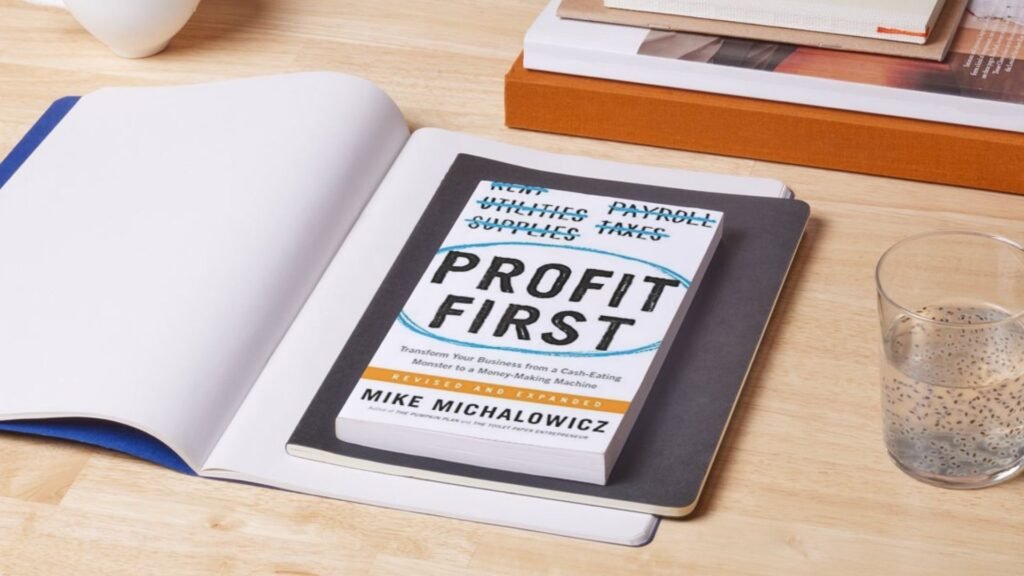
In Profit First, entrepreneur Mike Michalowicz flips the formula:
Sales − Profit = Expenses
Same math. Completely different behavior. By pulling your profit out first—before paying a single bill—you force your business to operate on what remains. And surprisingly, it works. Constraints don’t break a business—they sharpen it. When there’s less available for expenses, better decisions get made.

Why Most Business Owners Are Stuck in Survival Mode
According to Michalowicz, the real enemy isn’t low revenue — it’s the belief that you can grow your way out of a profit problem. Many business owners chase the next big client, the next big contract, thinking that’s when things will finally turn around.
But a bigger business with the same broken money habits is just a more expensive version of the same problem.
The Profit First system is designed to fix profitability now — at whatever size you are today — so that when growth comes, it’s built on a solid financial foundation, not quicksand.
How the System Actually Works: The 5-Account Method
The practical heart of Profit First is simple: instead of running all your money through one account, you separate it into five—each with a clear purpose.
Here’s how they work together:
1. Income Account
Every payment you receive lands here first—and only here. This account is for deposits only; no bills are paid from it.
2. Profit Account
Before anything else is paid, a percentage of income is moved here. This is your reward for running the business. A common target is 5–10%, with a portion distributed quarterly.
3. Owner’s Pay Account
This ensures you pay yourself consistently. Your salary becomes a set allocation—not something left over at the end.
4. Tax Account
A portion of each deposit is set aside for taxes, so when the bill comes, the money is already there.
5. Operating Expenses Account
This is the only account used for spending. If the money isn’t here, it doesn’t get spent—that constraint is what drives better decisions.

The Roadmap: CAPs, TAPs, and Getting There Gradually
One of the most practical parts of the Profit First system is understanding the gap between where you are and where you want to be.
Your Current Allocation Percentages (CAPs) show how your revenue is actually being used today—across expenses, owner’s pay, taxes, and whatever profit (if any) is left over.
Your Target Allocation Percentages (TAPs) represent what a financially healthy business at your level should look like.
The difference between the two is your roadmap. The goal isn’t to close that gap overnight—it’s to move toward it gradually. If your profit allocation is currently 0%, don’t jump straight to 10%. Start small—1% is enough. Then increase by 1–2% each quarter, adjusting expenses along the way.
Within six to twelve months, most business owners find themselves in a much healthier position—without feeling like they had to overhaul everything at once.
Why Profit First Matters for Our Three Client Stages
Profit First applies at every stage—but what it solves looks different depending on where you
are.
1. Financial Foundation: For New Business Owners
Most early-stage owners rely on their bank balance—if the money is there, it gets spent.
Profit First introduces a simple shift: not all money is available to spend. Some of it already belongs to profit, taxes, and owner pay.
At this stage, the goal is structure. With clean books and clear numbers, even a simple system creates better habits.
2. Builder CFO Lite: For Stable but Stuck Owners
The business is running—but it still feels heavy. Revenue is coming in, but profit doesn’t reflect the effort. Profit First acts as a reset, forcing clearer boundaries and better questions around spending, margins, and owner pay. This is where structure starts to turn activity into actual results.
3. Navigator CFO Partnership: For Scaling Entrepreneurs
As the business grows, so does complexity. At this stage, the core idea matters most: every dollar needs a job. Profit has to be built into the system—not left to chance.
That means pairing Profit First with forecasting and planning to support smarter, more confident decisions.

Final Thoughts
Profit First isn’t just about accounting—it’s a shift in how you approach your money. I used these principles in the early years of building NAVE. Like many owners, I paid everyone else first—but not myself. Within a year, that changed. I began paying myself consistently, built a small reserve, and gained a much clearer understanding of my numbers.
At every stage, the takeaway is simple:
● Early on: build better habits
● Stable but stuck: create boundaries
● Scaling: make profit part of the plan
A business shouldn’t just stay busy—it should create clarity, stability, and reward for the owner.
Where NAVE Bookkeeping & CFO Advisory Group Fits In
Understanding the concept is one thing—implementing it consistently is another. Setting up the accounts is simple. The challenge is knowing your numbers, understanding how your money is being used, and building a realistic path forward.
That’s where we come in.
At NAVE, we help business owners understand their numbers and use them to make better decisions—so profit becomes something you build, not something you hope for. If you’re ready to stop hoping for profit and start building it in, we can help you take a closer look at what’s happening in your numbers—and what to do next.
Contact us today and let’s take a look at your numbers together.
NAVE Bookkeeping & CFO Advisory Group — Guiding businesses through every stage of growth with expert financial foundations and CFO-level insights.